Trump Declares US-Iran Ceasefire Over as Brent Crude Surges 6%
Trump declared the June 17 US-Iran MoU 'over' at the NATO summit in Ankara on July 8, after Iran attacked three tankers in the Strait of Hormuz and CENTCOM retaliated with strikes on 80+ targets. Brent crude surged roughly 6% to around $78-79/barrel. The US Treasury had already revoked the
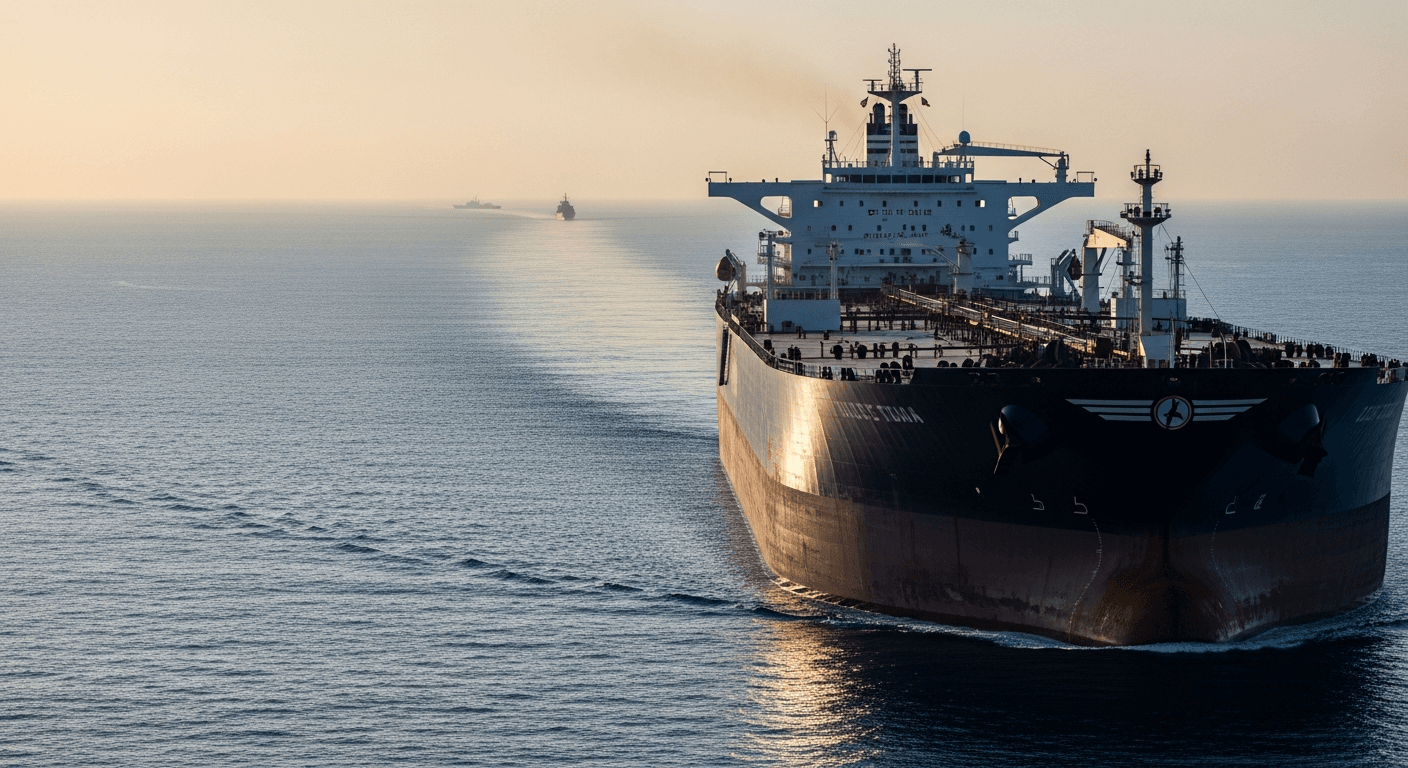
The June 17 MoU is dead, the sanctions waiver is gone, and Hormuz is back in play, oil markets are already pricing the damage.
Key takeaways
- Trump declared the US-Iran Memorandum of Understanding "over" at the NATO summit in Ankara on July 8, 2026, after Iran attacked three commercial vessels in the Strait of Hormuz and CENTCOM retaliated with strikes on more than 80 Iranian targets overnight.
- The US Treasury revoked General License X on July 7, snapping back the sanctions waiver that had allowed Iran to sell oil under the June 17 MoU, effective immediately for new sales.
- Brent crude surged roughly 6% to around $78-79 per barrel, per reporting from CBS News and Time; with the US Navy-led Joint Maritime Information Center (JMIC) raising the Hormuz risk rating to "Severe" from "Substantial," per Al Jazeera, freight rates, insurance costs, and energy prices face sustained pressure.
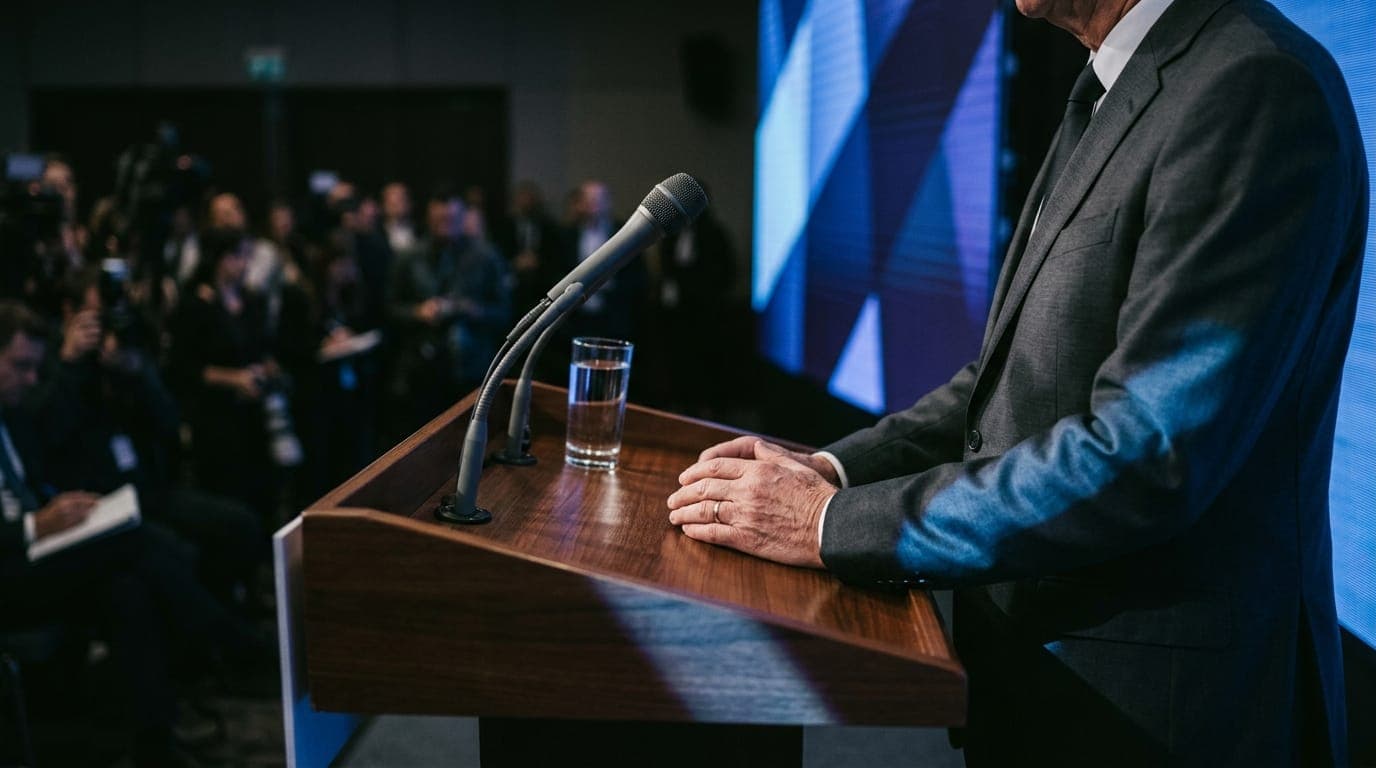
President Trump, speaking at a bilateral press conference alongside NATO Secretary General Mark Rutte at the Beştepe Presidential Compound in Ankara on July 8, 2026, called the US-Iran ceasefire finished. "I think it's over. I don't want to deal with them anymore. They're scum," Trump told reporters, per NPR and Time. "They're sick people, they're led by sick people, and they're vicious, violent people. And if they had a nuclear weapon, they'd use it," he continued, per CBS News and Time.
The remarks landed after a full cycle of escalation: Iran targeted three commercial vessels in or near the Strait of Hormuz on July 7, CENTCOM struck more than 80 Iranian targets overnight in retaliation, and Iran's IRGC then launched missile and drone strikes against US military facilities in Bahrain and Kuwait. Both countries intercepted the incoming fire, with no material damage reported, per Time and CBS News.
What Broke the Deal
The June 17 MoU, signed at the Palace of Versailles during the G7, had established a 60-day ceasefire with a mid-August expiration, per Time and Al Jazeera. Its core economic incentive was the sanctions waiver allowing Iran to sell oil. The US Treasury revoked that waiver (General License X) on July 7, effective immediately for new sales, with a grace period covering cargoes already at sea before that date. A US official quoted by CBS News framed the logic plainly: "The MOU in effect with Iran is entirely performance-based. Iran will only reap benefits if they exhibit good behavior."
Iran's attack on three tankers, the Marshall Islands-flagged M/T Al Rekayyat, the Saudi-flagged M/T Wedyan, and the Liberian-flagged M/T Cyprus Prosperity, per Al Jazeera citing CENTCOM and CENTCOM's official press release, was the performance failure that collapsed that structure. CENTCOM confirmed the strikes destroyed Iranian air defense systems, coastal radar, anti-ship missile capabilities, and more than 60 IRGC small boats.
Trump stopped short of ordering a full resumption of the war. "I'll let our wonderful negotiators keep talking if they want, but I don't see it," he said, per Time.
The Inflation Transmission Nobody Is Pricing
Before this conflict, roughly 20-25% of the world's seaborne oil and approximately 20% of its LNG passed through Hormuz, per Al Jazeera. Brent had already traded above $100 per barrel earlier in the war, per CBS News. At around $78-79 on a single morning's remarks, the market is not yet pricing a full closure, but it is pricing the removal of the normalization assumption.
That removal has a direct path into CPI. Higher oil flows into transport, manufacturing, and food costs. The Federal Reserve is already navigating a fiscal trap: the US is carrying more than $36 trillion in debt, which means tightening into elevated energy costs produces punishing debt service. Loosening with oil above $80 reaccelerates inflation.
Sustained Hormuz disruption removes that optionality. The Fed's next move becomes constrained by a chokepoint it cannot bomb its way out of. This is a structural energy shock, not a cyclical one.
The dollar-weaponization dimension compounds it. Every time the US revokes a sanctions waiver mid-deal, every non-Western sovereign watching takes another step toward dollar alternatives. Iran cannot use SWIFT. It will settle oil in something else.
The yuan cannot fill that gap structurally (Beijing's capital controls make it impossible at scale). But the pressure accelerates de-dollarization regardless, and it does so in the one asset class where the petrodollar has historically been hardest to route around.
Bitcoin's supply schedule is indifferent to who is firing missiles or printing Treasuries to pay for the response. The macro condition being assembled here, negative real yields, an inflation shock the Fed cannot cleanly address, and accelerating dollar-alternative pressure, is the same condition that has historically preceded Bitcoin's hardest rallies. The IRGC's warning of "harsher" retaliation "in the coming days," per Al Jazeera, suggests this condition has more room to develop.
The falsifiable version of that thesis: if Brent retreats below $72 within 48-72 hours on credible back-channel reporting that negotiations have quietly resumed and Iran re-commits to free Hormuz passage, and 10-year Treasury yields hold or drop, then this is another risk flare with no lasting inflation pass-through. That would be the signal the thesis is wrong for now.
What to Watch
The IRGC's explicit threat of further retaliation sets the next trigger. Watch Brent's behavior above or below $80, any credible back-channel reporting on renewed talks, and the state of Hormuz vessel flows as freight and insurance markets reprice. The NY Fed's June 2026 Survey of Consumer Expectations, released July 7, put 1-year inflation expectations at 3.7%, the highest since September 2023, before this session opened.
Update, July 8, 2026
Trump approved and ordered the strike package personally from Ankara, convening Secretary of State Rubio, Defense Secretary Hegseth, Treasury Secretary Bessent, and Joint Chiefs Chairman Gen. Dan Caine before the order went out, per Fox News. The targeting list went well beyond air defense: US strikes hit coastal surveillance systems, surface-to-air missiles, anti-ship cruise missiles, drone launch sites, and port facilities. Explosions were confirmed at Qeshm Island and the port of Sirik on Iran's southern coast, but the most consequential strike may have been on Kharg Island, a five-mile stretch off the Iranian coast that handles roughly 90% of the country's crude oil shipments, where Iranian state media reported multiple blasts.
On the sanctions mechanics, OFAC revoked General License X, the sweeping authorization issued June 21 that had permitted the production, delivery, and sale of Iranian-origin crude oil, petrochemical products, and petroleum products, replacing it with General License X1 effective July 7.
The new license authorizes no new Iranian oil sales after July 7, allowing only a grace period until July 17 for transactions already in process, with proceeds from those sales placed into a blocked, interest-bearing account rather than remaining available to Iran.
Iran's Foreign Ministry condemned the move as a violation of Article 10 of the MoU, which explicitly guaranteed oil export waivers, and warned of consequences from the US breach of its commitments.
The supply-chain fallout is already measurable. As many as 63 million barrels of Iranian oil are now either in transit or idling in tankers, per Bloomberg's estimates based on Vortexa data, with oil on floating storage in the Gulf having more than doubled in the past week to over 41 million barrels.
Iran is left with millions of barrels of crude moving or idling across a large area from the Persian Gulf to the Strait of Malacca, with most laden tankers not broadcasting a destination or broadcasting that they are available for new orders.
Asian refineries in Japan, South Korea, Taiwan, and India are acting with extreme caution despite receiving offers, driven by fears of shifting US policy and the potential imposition of secondary sanctions, while EU and UK restrictions remain firmly in place and tanker insurance has grown more complex.
Since the MoU was signed in mid-June, Iran had rushed to load cargoes from Kharg Island and move tankers out of the Gulf as fast as possible, after weeks of virtually no exports during the blockade. Those cargoes are now stranded inventory with no clear buyer. With Kharg Island now inside the US strike zone and 63 million barrels sitting on shadow-fleet tankers that nobody will insure or receive, the market is no longer pricing a corridor disruption. It is pricing a supply destruction event, and every barrel of that stranded oil is a live demonstration of what happens when a state's entire export revenue stream runs through infrastructure that a counterparty can bomb and a sanctions architecture that a counterparty can revoke overnight.
Update, July 9, 2026
The exchange widened dramatically overnight. CENTCOM hit 90 targets along Iran's coastline, and Iran answered with a coordinated salvo that went well beyond Bahrain and Kuwait. Iran's Revolutionary Guards claimed hitting 21 US military targets across the region, including the Fifth Fleet headquarters in Bahrain, Al-Azraq Air Base in Jordan, and Ali Al Salem Air Base in Kuwait. Jordan said it intercepted eight of ten ballistic missiles fired at Azraq with no casualties or damage reported. Qatar received an elevated security warning pushed to mobile phones, with an all-clear issued within ten minutes noting that a threat had been eliminated. Four Gulf states plus Jordan under active Iranian fire simultaneously is a qualitative shift from anything in the prior cycle. CENTCOM's second-day strikes reached areas that had not been touched since the April ceasefire, with roughly ten explosions reported in Chabahar and nearby Konarak, additional blasts confirmed in Bushehr, and strikes on Abu Musa Island and near Tahrouyi village in Sirik. Intercept rates held across the Gulf, but debris did not stay clean: one person was injured after material fell from interceptions over Kuwait, and debris caused damage at several locations across the country. Bahrain's Defense Force confirmed its forces intercepted and destroyed several Iranian missile and drone assaults. The IRGC's stated target list for the Kuwait package included US Patriot systems, an early warning satellite antenna in Qatar, and a fuel storage facility in Bahrain, confirming Tehran is deliberately probing the air defense architecture protecting US basing across the Gulf.
Two new policy declarations landed on top of the kinetic exchange and carry direct market implications. Trump threatened to launch another "big attack" against Iran and warned that the US Navy could resume its naval blockade of the Strait of Hormuz, less than 24 hours after US forces struck the country in retaliation for Iranian attacks on commercial ships.
The president acknowledged the blockade option carries its own risk, noting Iran could respond by placing mines in the Strait, but stated plainly: "We may put it back, the blockade, and it'll only be a blockade for Iran."
The White House is also revisiting the idea of forcibly seizing Kharg Island, Iran's primary crude oil export terminal. VP Vance layered on the explicit terms from Milwaukee: "The basic deal that we cut was we'll lift our blockade if you stop shooting at ships. But if you shoot at ships, we are going to punch back, and we're going to punch back harder than ever before."
Vance was unambiguous on consequences: "If they try to close it down, there's going to be a response from the American military. It's that simple. That's the deal. They can either follow it, or they can have exactly what happened to them last night."
Tehran's response on the chokepoint itself has been equally direct. Iran's chief negotiator said the strait would reopen only under "Iranian arrangements," signaling Tehran intends to maintain leverage over the chokepoint despite international pressure, and tanker traffic through the Strait was at a near standstill Thursday with just two tankers having sailed through in the early hours. About 6,000 seafarers remain trapped around the Strait, with the head of the UN maritime agency condemning the latest exchanges and warning that "reckless attacks have again placed innocent seafarers in grave danger." On the supply side, Iran shipped out 10 million barrels of crude and fuel overnight per TankerTrackers, a significant ramp-up from the 60 million barrels moved over the prior three weeks per Windward Intelligence, suggesting Tehran is racing to clear inventory before a potential reimposed blockade shuts the door. About 200 million barrels of oil escaped the Strait over the past three weeks, according to Lipow Oil Associates, the equivalent of roughly two days of global demand, and around 60 million barrels of that is Iranian, now sanctioned again with buyers given just ten days to take hold of it before it is off-limits.
Speaking aboard Air Force One, Trump acknowledged Iran had called seeking a deal, but said flatly: "I just don't know that they're worthy of making a deal. I don't know that they're going to honor the deal. That's the problem." That is the live tension: a blockade reimposition would snap shut the same Hormuz corridor that briefly moved 200 million barrels of oil and allowed prices to pull back from triple digits, removing the only inventory-replenishment window the global market got from the June MoU. The threat is the price signal. The Fed cannot bomb its way out of a chokepoint, and it cannot ease its way out of one either.
Update, July 10, 2026
Treasury moved from license revocation to active designation on Friday. The United States issued new Iran-related sanctions following Iran's resumption of attacks on international shipping in the Strait of Hormuz, the Treasury Department confirmed.
The sanctions target Ali Ansari, an Iranian banker and businessman based in Dubai who had previously been sanctioned by Britain for his role in financially supporting the IRGC's activities. Treasury described Ansari as a "key financier" for Iran's new leader Mojtaba Khamenei, saying he had diverted publicly funded wealth into an extensive overseas portfolio of real estate and commercial holdings to enrich himself, government elites, and the IRGC. The State Department's designation page logged the action under the heading "U.S. Squeezes Iran's Regime Financiers and Shadow Banking Networks."
This is a different instrument than the GL X1 wind-down. Revoking the oil license cut off the revenue tap. Friday's SDN designations go after the plumbing: the offshore financial networks that move regime money when the oil tap is restricted. GL X1's abrupt reversal of GL X underscored the speed at which U.S. sanctions policy toward Iran can shift , and Friday's action signals Treasury is not waiting to see how the kinetic situation resolves before layering on the financial pressure.
The compliance clock is now running on two tracks simultaneously. GL X1 provides only a 10-day wind-down period through 12:01 a.m. EDT on July 17, 2026. Companies with residual Iranian-linked cargoes, contracts, or receivables should prioritize unwinding those positions before the deadline and should not rely on any assumption that the wind-down period will be extended. Any counterparty that also touched Ansari's network or the Iranian exchange infrastructure now targeted by OFAC faces compounded exposure across both the energy and financial tracks at the same time.
Update, July 11, 2026
Iran rejected Washington's terms for resuming talks on Saturday, telling US interlocutors it will not return to negotiations unless the US first meets its pre-conditions: restoring the Hormuz transit arrangements Tehran believes it is owed under the MoU and reversing the new sanctions. Bloomberg reported Iran rejected Trump's contention that peace talks could continue without a ceasefire, saying Washington must meet Tehran's conditions for resolving transit issues through the Strait of Hormuz and normalizing its oil exports.
CNBC noted Iran said the Treasury's new sanctions were a violation of the preliminary deal even as its foreign minister arrived in Oman for talks.
The diplomatic impasse landed on top of a new personal threat dimension. India TV News reported Trump posted on Truth Social that the missiles were "locked and loaded" and aimed at Iran, warning of overwhelming military retaliation in the event of any assassination attempt against him.
Vanguard confirmed Trump stated that "Orders have already been given, and the U.S. Military is ready, willing, and able, for a one year period of time, subject to extension, to completely decimate and destroy all areas of Iran."
The remarks followed a Wall Street Journal report claiming Israel had shared intelligence with Washington suggesting Iran had developed a new plot to assassinate the US president.
The assassination threat context comes directly from Tehran's own public posture. RFE/RL reported that the July 11 statement was the first comment issued in Mojtaba Khamenei's name since the funeral procession, and it read: "We pledge to avenge the blood of the martyred leader and all the martyrs of these two wars from the criminal and disgraced killers."
He emphasized this was state policy and did not hinge on any single official, adding that "soon, individuals among the free people of the world will each carry out a part of this divine mission." The combination of Iran rejecting preconditions for talks while its supreme leader issues an open vengeance mandate and Trump pre-authorizes a year-long decimate order means the Oman channel is now carrying the full weight of preventing a complete resumption of hostilities, with no structural floor under it.
Update, July 13, 2026
The operational threshold everyone feared has been crossed. The US launched its third round of strikes on Iran as Tehran declared the Strait of Hormuz closed "until further notice." The trigger was the IRGC attacking the Cyprus-flagged container ship M/V GFS Galaxy. Iran said it was closing the critical passage after IRGC forces struck the vessel for using an "unauthorized route," leaving one crew member missing and the ship with significant damage to its engine room.
CENTCOM completed the third round of strikes July 11, holding Iranian forces accountable for attacking another commercial ship in the Strait.
They hit approximately 140 Iranian military targets, including missile and drone sites, naval capabilities, ammunition storage facilities, communication networks, and coastal surveillance locations. Three nights of strikes now total more than 300 targets hit.
Iran's response went wider than the strait. Iran's IRGC said it struck and disabled a second vessel in the Strait and targeted the US strategic air base at Al Udeid in Qatar with ballistic missiles, claiming it destroyed a fighter jet maintenance center and command and control facility.
Iran then launched retaliatory attacks on US-allied Gulf states, including Bahrain, Kuwait, Qatar, Jordan, and Oman.
Qatar's Transport Ministry issued an urgent advisory suspending all maritime vessel activity until further notice, the first blanket maritime suspension by a Gulf state since the conflict began. CENTCOM pushed back on the closure declaration directly, stating "Iran does not control the strait" and that US forces are "positioned and prepared to ensure that freedom of navigation remains available." The on-the-water reality tells a different story: according to Windward Maritime Intelligence, there were only 21 commercial vessel transits through the strait on July 11, significantly lower than the 140 transits per day recorded prior to wartime closures.
This is the line the existing article's inflation analysis was built around. The closure declaration is not conditional on a negotiating concession -- it is tied to the end of US military operations in the region, a bar Washington has no intention of clearing. Every refiner still trying to price forward contracts, every shipping insurer still writing war-risk coverage, and every central banker still pretending this is a localized conflict now has to model a scenario where the world's primary oil chokepoint is functionally shut by an adversary willing to shoot commercial vessels and the US military is responding with strikes rather than reopening. That is not a risk premium. That is a structural repricing event.
Update, July 14, 2026
Iran struck two UAE-flagged supertankers in the southern lane of the Strait of Hormuz on July 13, this time with lethal effect. Two Iranian cruise missiles hit the tankers Mombasa and Al Bahiyah in Omani territorial waters, killing one Indian crew member and wounding eight others.
The UAE condemned the attack as a serious breach of international law and said it remains "on high alert and fully prepared to deal with any threats." The IRGC claimed responsibility, stating the ships ignored warnings and attempted to pass through "a mined route." That claim matters: it suggests Tehran is asserting mine-control authority over specific transit corridors, not just attacking opportunistically.
Trump responded on Truth Social and on Fox & Friends Monday morning by flipping the entire post-MoU framework on its head. In the Truth Social post, Trump declared: "The U.S.A. will be, from this point forward, known as 'THE GUARDIAN OF THE HORMUZ STRAIT'" and said the US will be "reimbursed, at the rate of 20% on all cargo shipped, for any and all costs necessary to do the job of providing safety and security to this very volatile section of the World."
Trump also said the US will reimpose its blockade of Iranian ports near the strait, with the blockade set to resume Tuesday at 4 p.m. The 20% figure is not trivial. A supertanker carrying roughly two million barrels prices out at about $170 million per cargo at current rates, making the 20% levy approximately $34 million per voyage.
Trump's plan has no stated enforcement mechanism, with no clarity on how fees would be calculated, collected, or applied to shipping firms, insurers, or banks.
The diplomatic and market blowback was immediate. Iranian Foreign Minister Araghchi mocked the proposal on social media, writing that Trump was "absolutely right" that whoever provides safe passage should be compensated, declared Iran the permanent guardian of the strait, and added "20% is of course too much. We will be fair" -- before the International Maritime Organization stated it was "waiting to find out more" but remained opposed to tolls on international waterways.
The IMO spokesperson was unambiguous: "IMO stands firmly against charging fees for passage through straits used for international navigation. There is no legal basis through which to introduce mandatory tolls simply to transit through a strait."
Brent crude settled at $83.30 per barrel on the day, a gain of 9.59%, its biggest single-day percentage gain in over six years.
Strait traffic has already collapsed: Kpler data show only 14 vessels crossed on Sunday, including four crude tankers, down from 37 a week earlier. The toll proposal also hands Tehran a rhetorical gift it did not have yesterday: the US Secretary of State told the world just weeks ago that no country may charge fees on an international waterway, and the president has now proposed exactly that, at a rate critics note is substantially higher than what Iran had sought.
Update, July 23, 2026
Trump codified a new tit-for-tat retaliation doctrine on Wednesday. "From this point forward, any time the Islamic Republic of Iran shoots at a ship in the Strait of Hormuz, whether it be by Missile, Rocket, Drone, or any other device or weapon, the United States will bomb and destroy ONE BRIDGE OR POWER PLANT," Trump wrote on social media , explicitly extending that threat to infrastructure "next to, or in, the Capital City of Tehran," per the Washington Times. The US has already bombed bridges in southern Iran over the last 12 days of fighting, but targeting power plants and striking Tehran directly would mark another escalation.
Iranian Foreign Minister Abbas Araghchi responded that Iran's defense doctrine is an "eye for an eye" and threatened countries that actively support US attacks against Iran.
The IRGC moved to demonstrate it means to enforce its transit authority this morning. Iran's IRGC said an explosion set a tanker ablaze in the Strait of Hormuz after it attempted to navigate the southern route off the coast of Oman.
Two other vessels quickly turned back following the explosion, with the IRGC claiming the three ships were acting under US orders and "intended to pass through the mine-laid route south of the Strait of Hormuz."
The IRGC warned: "The Strait of Hormuz is under our control and as long as America's evil deeds in the region continue, it is completely closed and no oil tanker will enter or exit."
Oil markets are absorbing all of it in real time. Brent crude reached $97 a barrel today, having gained roughly $13 over the past week as the conflict entered its 12th consecutive night of US strikes. The Houthis are now layering on a second chokepoint: Iran had called on the Houthis to block the Bab el-Mandeb Strait if the US continued to hit Iran's electrical infrastructure, and the Houthis subsequently declared "a maritime embargo against the criminal Saudi enemy, effective immediately," per The Hill. Closing Bab el-Mandeb would cut world oil supply by 7% and compound the disrupted flow out of the Persian Gulf, which has already seen a 10% reduction since the war began. Qatari mediators are still working a deal, per Axios, but Trump's public posture Wednesday was the opposite of urgency: "They're getting hit so hard, and they want to make a deal," he said in Georgia. "But I say they're not ready to make a deal because every time they make a deal they want to change it. They're not ready. They will be ready very soon."
Update, July 24, 2026
The last diplomatic off-ramp just closed. Iran rejected a ceasefire proposal from Trump that was carried to Tehran by Iraqi Prime Minister Ali al-Zaidi, per Iranian and Iraqi officials cited by the New York Times.
Al-Zaidi had visited the White House and met with Trump and senior national security officials before making the trip to Tehran.
Iranian officials said the proposal was the only offer on the table, and that Tehran was not interested in a temporary deal that left the question of control over the Strait of Hormuz unresolved.
Iranian Foreign Minister Abbas Araghchi publicly dismissed the US approach as "irrational, excessive, and hegemonic."
The kinetic tempo is not slowing while diplomacy burns. CENTCOM confirmed it completed its 13th consecutive night of American attacks against Iran.
CENTCOM stated it targeted Iranian military command centers, drone storage facilities, communication networks, coastal surveillance sites, and maritime capabilities. The conflict is also spreading geographically: oil topped $100 a barrel for the first time since May after Houthi rebels targeted Saudi ships in the Red Sea, threatening to cut off another route for oil exports already choked by the effective closure of the Strait of Hormuz.
Iran's rejection of the Iraqi-mediated proposal removes the last functioning third-party channel and forecloses a negotiated pause before any US escalation. Both Iran and the US are now preparing for a possible expansion of the conflict, with Iran warning it could target Tel Aviv and seek Houthi assistance to close the Bab al-Mandab Strait.
Trump had already warned the US would destroy Iranian bridges or power plants for every attack on Hormuz shipping, and Iranian officials responded not by narrowing the confrontation but by broadening it, signaling that any future conflict would no longer be confined to military targets or the strategic waterway itself. Two major shipping chokepoints simultaneously under fire, Iranian infrastructure explicitly in the crosshairs, and no ceasefire channel left open is the energy shock scenario the market has not fully priced.
Update, July 29, 2026
The US military brought a halt to two weeks of strikes on Friday as diplomats sought to give peace talks "some space."
Trump said Monday that the US halted strikes at Iran's request. "They asked us very nicely, 'Please stop, let's meet,'" he told reporters aboard Air Force One. "And that's where we are right now, see what happens. If we don't make a deal, we go back to the same thing."
The diplomatic posture has inverted sharply from the Gates of Hell rhetoric. The US has now requested a new temporary ceasefire with Iran and is seeking a return to the collapsed and suspended MoU, with discussions to include Yemen, and with Trump seeking to make AnsarAllah a party to the negotiations. Tehran is not playing along. Iran's Foreign Ministry spokesperson Esmail Baghaei said Iran "currently have no negotiations with the United States," reiterating that official ongoing talks are solely with Oman regarding the future of the Strait of Hormuz.
Iran comprehensively rejected all negotiations throughout the past week and confirmed it will not start negotiations under any circumstances, with the strategic logic being: why would Iran consent to give the US time to regroup and rearm before launching another round of strikes when it believes it has the US on the run.
Oil markets moved immediately on the pause. Oil prices fell sharply on the development, sending stocks soaring at the market open, though they pared those gains as the day wore on. The relief bid is fragile. Ship traffic through the Strait of Hormuz remains well below prewar levels, with fewer than 10 commodity ships passing through as of Monday morning according to shipping data tracked by CNN, against roughly 100 commercial vessels on a typical prewar day.
Trump described the negotiations as "very friendly" and told supporters in Michigan there was "a good chance" of progress, while reiterating that military action could resume if talks fail. Iran has publicly denied holding direct talks with Washington at all.
Update, August 2, 2026
Trump posted on Truth Social late Saturday night that he had called off a planned strike package against Iran. "We have just been asked by Iran, and other Middle Eastern countries, to hold off any attack in that the perimeters of a deal has been agreed to," he wrote. Trump said the deal "would include the Immediate, Complete, and Total OPENING OF THE HORMUZ STRAIT, and an end to Iran's nuclear threat."
Trump added that he agreed, "for the future benefit of the WORLD and, likewise, the survival of a successful and prosperous Iran, to cancel the attac[k]." The halt came after US and Israeli forces were reported to have been preparing a major joint bombing campaign targeting Iranian energy infrastructure this weekend.
The Saudi hand is visible. Saudi Crown Prince Mohammed bin Salman spoke with President Trump on Saturday and cautioned him against conducting a fresh round of strikes on Iran.
The Gulf kingdom said Crown Prince Mohammed bin Salman "stressed the need to prioritize dialogue to reduce escalation and the importance of making every possible effort to achieve calm that paves the way for diplomatic solutions, preserves the region's security and stability, and prevents a wider conflict."
Riyadh has heavily influenced Trump's Iran policy at previous inflection points and appears to have exerted similar influence in delaying or narrowing the next phase of US military action.
The durability question is wide open. Iranian state media gave no indication that Iran had asked for the attacks to be called off or that Tehran's position on the Strait of Hormuz had changed, and Iran has not publicly acknowledged talks.
Iran's defense minister posted on X that the Islamic Republic was "neither surprised nor passive" following Trump's announcement and said Iran continues to remain alert. On the Iran-Oman track, negotiations between Iran and Oman over the Strait of Hormuz are in their final stages, Iranian Foreign Minister Abbas Araghchi said on Sunday, according to state news agency IRNA, but Iran's Foreign Ministry moved quickly to fence the scope: spokesman Esmaeil Baqaei stressed that an understanding between Iran and Oman on a new route "does not mean that the Strait of Hormuz will be opened or remain closed," and Baqaei emphasized that transit mechanisms are strictly a bilateral matter between Tehran and Muscat, with no third party or international consortium permitted to manage or intervene in the strait's security. The gap between Trump's public framing of a done-deal framework and Tehran's insistence it is negotiating only a bilateral navigation mechanism with Oman is the fault line that matters. A regional official involved in mediation efforts told the Associated Press that the proposal announced by Trump calls for the US and Iran to return to negotiations, a return to talks, not a signed agreement.
Update, August 3, 2026
Trump called off a planned large-scale military strike on Iran late Saturday, announcing on Truth Social that the "perimeters of a deal" had been agreed upon.
Speaking on Air Force One Sunday, Trump said the canceled strikes were going to be "the biggest attack since World War II."
He said he called off the strikes at the request of Saudi Arabia, the United Arab Emirates, Qatar, and Iran, and described a deal covering the Strait of Hormuz and Iran's denuclearization as "imminent."
The Saudi intervention was the decisive variable. Axios reported that Saudi Crown Prince Mohammed bin Salman called Trump on Saturday, urging the president to cancel the strikes and return to negotiations.
Saudi officials underscored in their engagements with the Trump administration that the kingdom, along with the UAE and Qatar, are in a good position to defend against further Iranian attacks, but that Kuwait could be more vulnerable to attacks by Iranian-backed militias in Iraq.
Other regional powers including Turkey and Pakistan also pressed the US and Iran to de-escalate. Iran's position going into Monday was less accommodating: Iran's foreign ministry spokesperson said at a press conference Monday that Tehran had no plans to hold direct talks with Washington, clarifying that current negotiations are with Oman and are focused on reaching an understanding on a safe passage route through the Strait of Hormuz.
Oil moved hard on the headline. WTI futures for September delivery declined nearly 6% to $79.66 per barrel, while Brent crude futures for October delivery lost 5.16% to $83.39 a barrel. That is the mirror-image of the move that opened this story, and it illustrates exactly the problem: Trump has repeatedly threatened and then canceled big attacks, citing progress in talks, only for diplomacy to be upended by the two sides resuming tit-for-tat strikes.
Analysts caution that diplomatic progress may continue to be punctuated by periodic military flare-ups, with miscalculation by either side potentially triggering renewed escalation. A market that whipsaws 5-6% on a Truth Social post in either direction is not pricing a resolution. It is pricing optionality on a conflict where the fundamental pressure has not cleared.
Update, August 8, 2026
Iran's Supreme National Security Council blew up what the White House had been calling an imminent deal. SNSC Secretary Mohammad Bagher Zolghadr published a statement through Iranian state media saying "until America corrects its behavior, the Strait of Hormuz will not open," one day after Trump told reporters from the Oval Office that negotiations were going "very well" and a deal could be signed soon.
Zolghadr's itemized list demands the US stop threatening Iran, end hostilities across Lebanon, Palestine, Yemen, and Iraq, terminate the naval blockade, withdraw all military forces from around Iran, pay war reparations, lift sanctions, and release frozen Iranian assets.
The demands land directly on top of a separate Iran-Oman negotiating track that had been edging toward closure. Iranian Foreign Minister Abbas Araghchi said Iran is "very close" to reaching a deal with Oman on managing the strait, but cautioned that reopening was "subject to other conditions," including the US making amends for what he characterized as a violation of the June MoU.
The IRGC's own spokesman undercut even the Oman track, telling state media that reopening the Strait "has its own specific mechanism and has nothing to do with the negotiations between Iran and Oman." The White House did not respond to requests for comment on Zolghadr's demands.
Treasury Secretary Bessent had told CNBC earlier this week that a Hormuz agreement with freedom of movement could come as soon as Wednesday, and Trump and Rubio had both signaled a deal was imminent. The SNSC statement shreds that timeline. A proposed framework that had been reported as the basis for a deal would give Tehran control over ships entering the Gulf through the strait, described as one of the biggest concessions yet to Iran, even as US officials had repeatedly insisted they would never agree to Iran controlling access to the world's most important energy trade route. What Iran published Saturday makes explicit what that negotiating posture always implied: the strait is the leverage, and Tehran intends to price it accordingly.
Update, August 10, 2026
Iran's Supreme Leader Mojtaba Khamenei has reshuffled the body that controls every major security and foreign-policy decision. Khamenei appointed former IRGC commander Mohsen Rezaei as his representative to the Supreme National Security Council (SNSC) , with Rezaei subsequently named secretary of the body. Rezaei is not a neutral technocrat stepping into a quiet job: he led the IRGC from 1981 to 1997 and is now placed inside the institution that coordinates Iran's most sensitive security and foreign-policy decisions.
Rezaei said in July that control of the Strait of Hormuz is "more important than dozens of atomic bombs" and declared that Iran would never allow unauthorized control of Hormuz, through which nearly 20% of global crude transits. Putting that man at the top of the SNSC is not a staffing decision, it is a statement of maximalist intent.
The policy posture that comes with the promotion is already visible in Iran's negotiating position. Crude prices extended gains after Iran's Revolutionary Guards warned that they would not reopen the strait until Washington complied with demands including compensation for war damage.
Tehran insists on retaining control of the waterway and wants to charge tolls for passage through it, a demand US officials have rejected.
Iran's Foreign Minister Araghchi said Sunday there was "no possibility of restarting negotiations" as long as the US continues violating the June memorandum of understanding without compensating for its "violations," per Tasnim News Agency.
Trump's response to the hardened Iranian stance is economic patience rather than additional strikes. Trump told Axios Sunday that the US is only "semi-negotiating" with Iran and indicated he was willing to let the economic consequences of the war and naval blockade force Tehran to the negotiating table instead of launching more military strikes.
Trump said: "We are only semi-negotiating with them. We are just watching Iran with its huge inflation and the fact they have no money." The bet is that Iran's internal economic collapse closes the gap that kinetics could not. The problem with that theory is that the man now running Iran's security apparatus just told the world that Hormuz control matters more to Tehran than a nuclear deterrent. That is not a negotiating position that crumbles under inflation pressure.
Update, August 14, 2026
Treasury Secretary Scott Bessent went on Newsmax Thursday and put the financial pressure campaign on a formal countdown. "Watch this space for more announcements coming next week because we are going to apply measures like have never been seen in the history of economic isolation on a country," Bessent said. He framed the architecture explicitly: the coming actions "will be a combination of economic isolation like the world has never seen before, and the continued blockade in the Strait of Hormuz that will keep anything from going in or out of the Iranian ports." That is a named timeline, not a threat, and it lands as the Bloomberg primary report confirms the package is designed as a "one-two punch" that pairs the sanctions with the continued port blockade.
Defense Secretary Hegseth separately declared that the United States can maintain its naval blockade of Iranian ports "indefinitely," saying the Navy will rotate ships in and out to sustain the pressure regardless of how long Iran holds out. The operational picture underneath those declarations is already deteriorating: vessel transits through Hormuz fell to a one-week low of eight on Wednesday, down from a five-day average of roughly 13 and roughly 94% below the pre-war daily average of 130 ships.
The second chokepoint is not sitting still either. Iran-backed Houthis have been running a parallel pressure track against Saudi energy infrastructure. Houthi rebels claimed attacks on Aramco facilities in the Saudi cities of Jizan and Yanbu in late July, and Houthi rebels followed with a drone strike on the Aramco refinery in Jizan, with their spokesperson stating the strike "was precise."
Six people aboard a vessel in the Red Sea were killed by Houthi rebels, with marine insurers now estimating the conflict has generated $1.5 billion to $2 billion in claims from roughly 70 vessel casualties since the war began. Hormuz and the Red Sea are now simultaneous pressure points on global energy infrastructure, and Treasury is about to add a third layer in the form of sanctions the department itself is describing as without historical precedent.
Update, August 16, 2026
Treasury Secretary Scott Bessent went on Newsmax Thursday and put a timestamp on the next escalation. "Watch this space for more announcements coming next week," Bessent said, promising measures "like have never been seen in the history of economic isolation on a country."
The move will be part of a "one-two punch" that includes the continued blockade of Iran's ports. The specifics remain undisclosed, but the framing is deliberate: Bessent is signaling that the kinetic campaign is now explicitly paired with a financial campaign designed to outlast it.
The pressure points Bessent has to work with are real but carry blowback risk. China buys more than 90% of Iran's oil exports, and penalties on entities that facilitate those purchases would directly reduce Tehran's oil revenues.
Washington has already sanctioned some Chinese teapot refineries and firms since the war began, but has stopped short of targeting the major Chinese banks that finance the trade, with the risk being that hitting Chinese companies or financial institutions worsens tensions with Beijing ahead of a planned Trump-Xi meeting.
There is also an economic tradeoff, since curtailing Iranian barrels would remove discounted crude from the global market and could lift already elevated oil prices.
On the currency and shadow-finance layer, exchange houses in countries like the UAE help Iran repatriate funds by converting payments often received in Chinese yuan into usable currencies; Treasury has already sanctioned some of those exchange houses under the "Economic Fury" campaign, but Iran has spent years building alternative channels to move money outside the formal financial system, meaning pressure on intermediaries tends to push transactions toward new ones rather than stop them. The US has already imposed a naval blockade that has cost Tehran roughly $4.8 billion in oil revenue, so whatever Bessent announces next week has to materially exceed that baseline to change the regime's calculus. The market is watching the announcement window; any action that meaningfully targets Chinese financial institutions or accelerates shadow-fleet interdiction will move oil prices immediately.
Update, September 9, 2026
Brent hit $102.05 per barrel on the morning of September 9, climbing $2.20 from the prior session and pushing decisively past the psychologically important $100 threshold for the first time since late July. The immediate catalyst was kinetic: CENTCOM destroyed five Iranian crude oil carriers on September 8 in response to IRGC ballistic missile attacks on a US Navy warship, and Washington stated it will respond to each subsequent Iranian hit by destroying another Iranian tanker.
UBS energy specialist Dominic Ellis concluded that US strikes on Iranian oil tankers, renewed attacks on Saudi energy infrastructure, and a fresh Iranian strike on a US base in Jordan together signal that a "US-Iran off-ramp remains elusive."
UBS argues that the familiar pattern of investors fading geopolitical oil rallies whenever diplomacy appeared capable of pulling both sides back is becoming much harder to rely on, with Iran having reportedly rejected the latest US offer of talks and retaliation continuing on both sides.
Goldman Sachs head commodity strategist Daan Struyven raised his Brent/WTI price forecasts by $5 to $85/$80 for December 2026 and to $80/$75 for 2027 on the assumption that Mideast shipping disruptions continue into 2027, and outlined a price upside scenario where Brent could exceed $120 per barrel if 2027 average Gulf output remains 4 million barrels per day below pre-war levels.
"We view more intense shipping attacks in Hormuz and the Red Sea as the most likely driver of this lower-output, higher-price scenario," Struyven said in his Monday note. The EIA's own data underscores the physical reality those forecasts are anchored to: crude oil and petroleum liquids transported through the Strait of Hormuz averaged just 4.9 million barrels per day in the second quarter of 2026, down from 21.6 million barrels per day in the fourth quarter of 2025 before the conflict began.
Sources
- CENTCOM, US Forces Complete New Round of Retaliatory Strikes Against Iran (July 7, 2026)
- US Treasury / OFAC, General License X revocation, cited in CBS News live updates; verify direct URL at ofac.treasury.gov/recent-actions
- Trump remarks at NATO summit Ankara press conference, July 8, 2026, sourced per NPR, CBS News, Time, and Al Jazeera
- Iran tanker attacks first reported by Axios
Frequently Asked Questions
What was the US-Iran Memorandum of Understanding, and was it legally binding?
The MoU was signed June 17, 2026, at the Palace of Versailles during the G7 summit, per Time and Wikipedia's Iran war timeline. It established a 60-day ceasefire with a mid-August expiration and was structured as a performance-based arrangement: Iran's access to sanctions relief, specifically the ability to sell oil under General License X, was contingent on its behavior. It was not a formal treaty and carried no enforcement mechanism beyond the sanctions architecture the US controls unilaterally.
How much of the world's oil passes through the Strait of Hormuz, and what happens to prices if it closes?
Roughly 20-25% of the world's seaborne oil and approximately 20% of global LNG transits Hormuz, per Al Jazeera and CNN. A sustained closure would remove that volume from accessible global supply, with no short-term alternative route at equivalent scale. Brent already traded above $100 earlier in this war, per CBS News, under conditions short of a full closure.
Does an oil price spike actually affect Bitcoin's price?
Not directly, and not immediately. The transmission is macro, not mechanical. Sustained high oil raises CPI, constrains the Fed's ability to tighten without triggering a debt-service crisis on a $36T+ debt load, and pushes real yields negative.
Historically, negative real yields and dollar debasement pressure have been the macro conditions most correlated with Bitcoin's strongest appreciation periods. The argument is not "oil up, Bitcoin up." It is that the policy response to an oil shock often creates the monetary conditions Bitcoin was built for.