In wake of the Fed's repo operations, many men, myself included, have attempted to explain the situation. Who needs liquidity? Who drained the liquidity? Why does the Fed need to inject so much liquidity so quickly? What the hell is going on?!
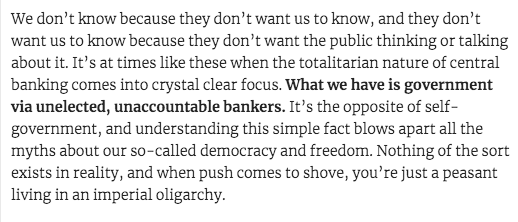
The fact of the matter is that there is a very select number of people out of the many billions of us on this planet who know. And only them. These people are the people who work at the Fed, the primary dealers who have access to the Fed window, and some other insiders who certainly never leak any information. This is how your money is created, freaks. In some black box that you have no control over. Does this really make any sense? Should the most important tool that humans utilize on a daily basis be controlled by a select few?
I highly recommend you check out Michael Krieger's most recent article on monetary looting and the weird irony of a free market controlled by a black box that no citizen has any insight into. Why don't we ask for transparency when it comes to how our money is being created? Why do we put up with overt theft and cronyism? Do you freaks like not having any control or say in the matter of your money is created?
Psssst... Bitcoin gives you control.
Final thought...
Hungover 9am dentist appointments... not that bad actually.