Iran Threatens Gulf Ground Invasion as Hormuz Flows Hit 40% Below Pre-War
Iran's top national-security official has threatened ground incursions into Gulf states and the destruction of data centers and undersea cables if the U.S. resumes strikes. Hormuz is already running 40% below pre-war crude flow levels, with tanker attacks hitting a wartime high.
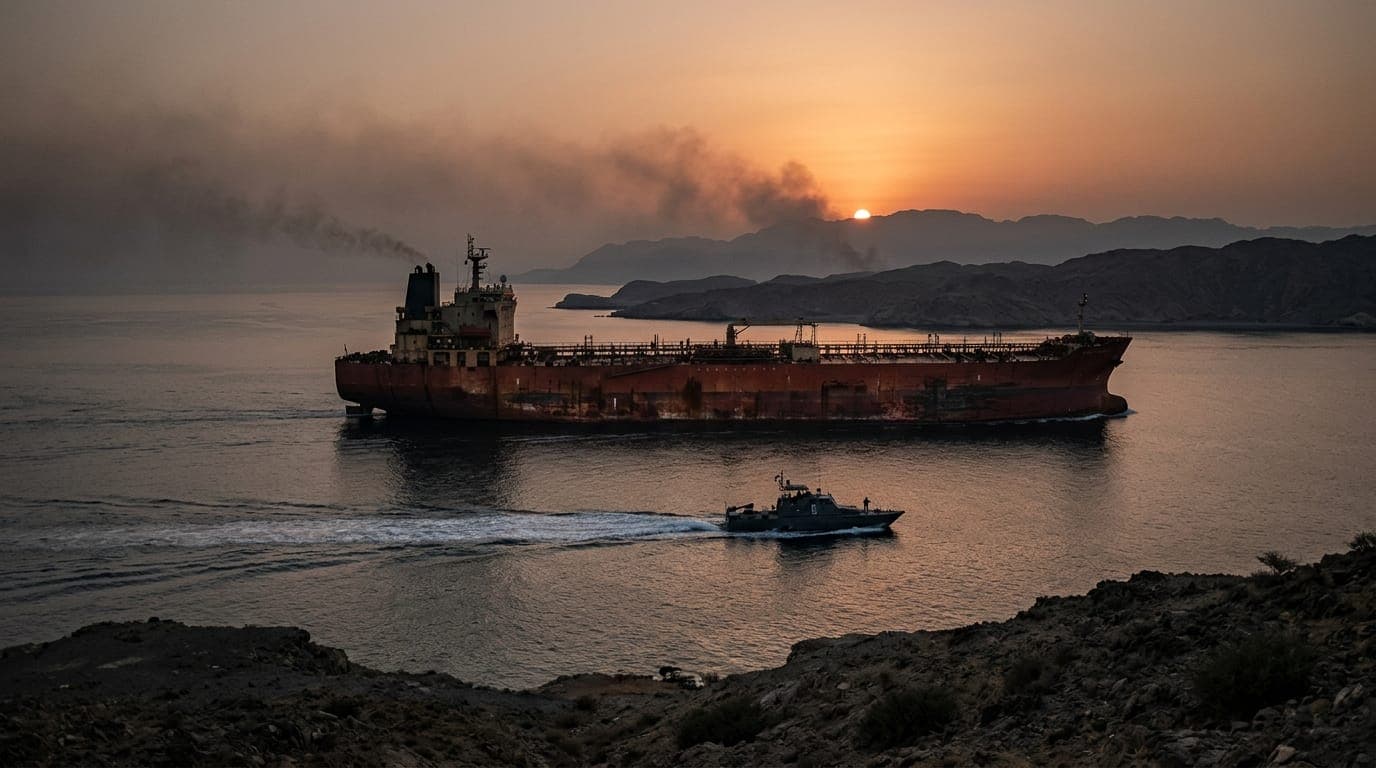
Iran's top security official is warning of ground incursions into Gulf states and destruction of regional data centers if U.S. bombing resumes. The strait is already bleeding crude.
Key takeaways
- Mohsen Rezaei, Secretary of Iran's Supreme National Security Council, has threatened to destroy Gulf data centers, AI facilities, and undersea internet cables if the U.S. resumes major bombing strikes against Iran.
- Strait of Hormuz crude flows fell to approximately 8.5 million barrels per day in the week ending October 9, roughly 40% below pre-war levels, with tanker attacks hitting a wartime high of 11 in a single week per IMO data cited by Kpler.
- A post-midterm U.S. bombing resumption would likely accelerate that supply crunch into a durable oil shock, placing the Fed squarely in the stagflation trap where cutting rekindles inflation and holding breaks the economy.
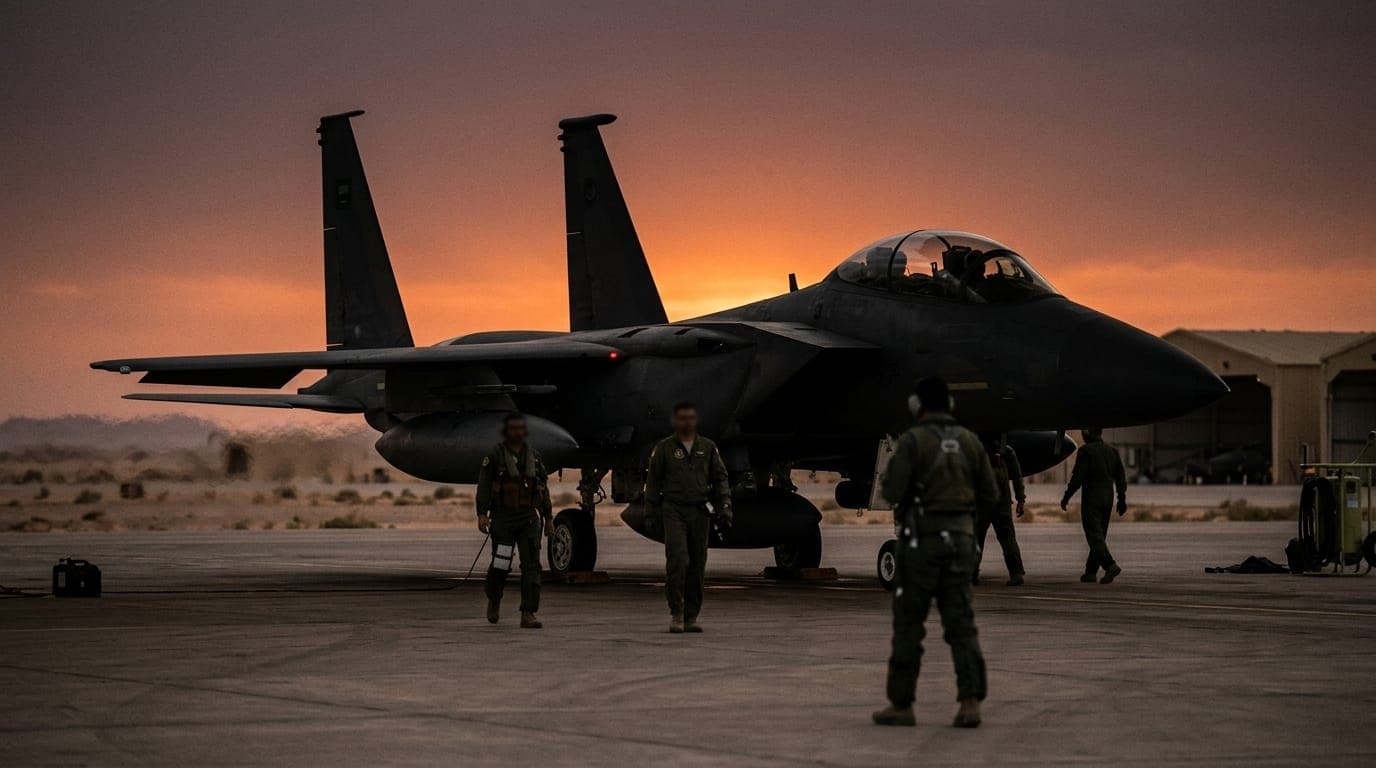
Iranian officials have privately warned Gulf counterparts that Tehran could launch ground incursions into neighboring countries if the U.S. restarts major bombing campaigns against Iran, first reported by The Wall Street Journal on October 13. The threat is not abstract posturing. It arrives while Hormuz is already operating well below pre-war throughput and while both sides are deliberately bleeding each other out ahead of what Tehran expects to be a post-midterm escalation.
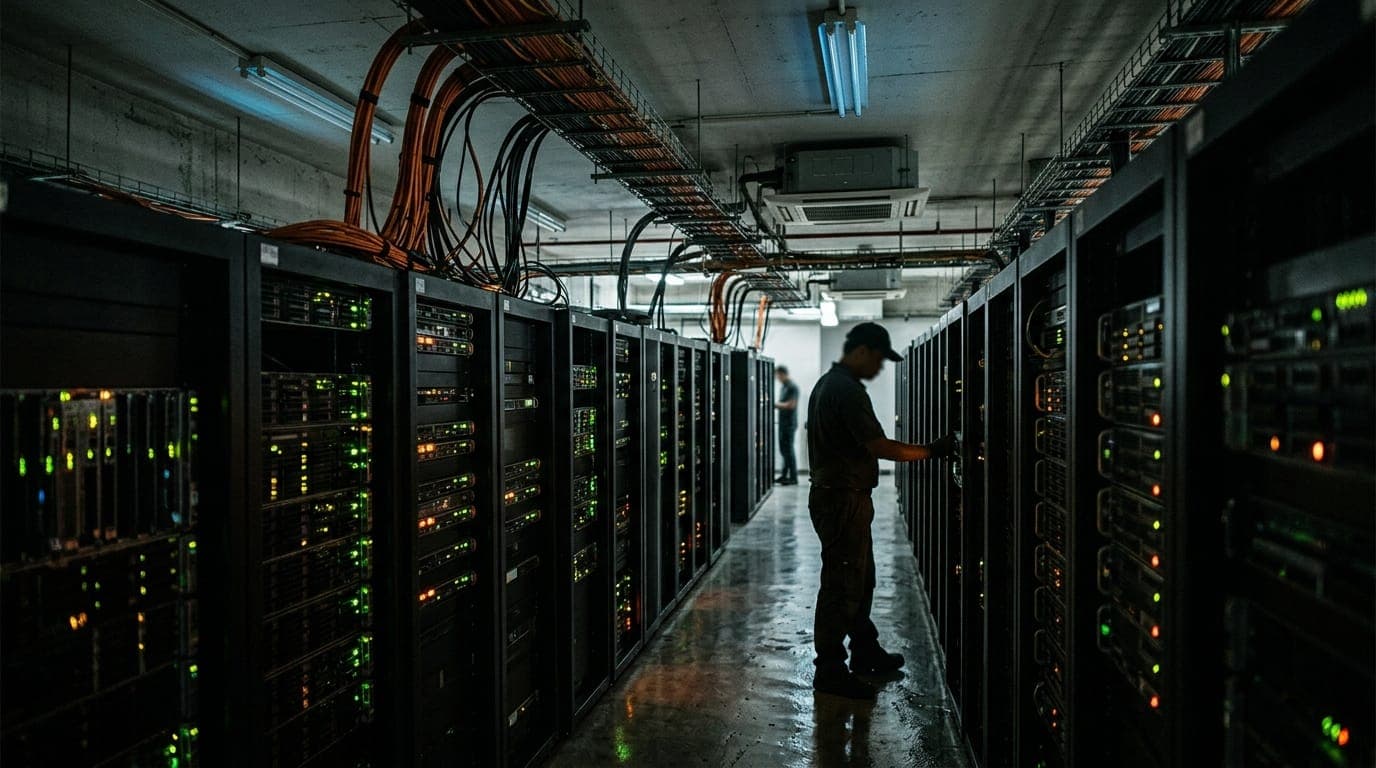
Mohsen Rezaei, Secretary of Iran's Supreme National Security Council and former IRGC commander, made the stakes explicit in a Press TV interview aired approximately October 11-12. "We have not yet included these assets among our targets," Rezaei said, via Iran's state-run IRNA news agency as reported by multiple outlets. "But if war breaks out, many of these cables, data centers, artificial intelligence facilities, and numerous other sites will be destroyed." He separately indicated Iran is prepared to "face the enemy with a much broader and more extensive plan" if hostilities resume.
What the Strait Looks Like Right Now
The current pause is already punishing global energy markets. Per Kpler data cited by CNBC, Hormuz crude flows ran at approximately 8.5 million barrels per day in the week ending October 9. Pre-war, the Congressional Research Service put Hormuz throughput at roughly 20 million barrels per day, representing 25% of global maritime oil trade and 19% of LNG. The current figure is a 40% reduction from that baseline, and it reflects the "calm" period.
Tanker attacks hit a wartime high of 11 in a single week ending October 4, per IMO data cited by the same Kpler/CNBC report. Iran attacked roughly two ships per 100 transiting the strait in the third quarter. Approximately 40% of oil exports now bypass the strait via alternate routes. Brent crude is trading above $101 per barrel.
Satellite imagery cited by the WSJ shows Iran fortifying nuclear sites and border areas. The regime is simultaneously running civilian paramilitary training programs, including shoulder-fired antiaircraft missile instruction and war-readiness preparation reaching kindergarten-age children.
The Central Bank Trap Hidden Inside the Energy Story
The geopolitical drama is the surface. The structural problem is what sits underneath it.
The Fed cannot print its way out of a physical supply shock. COVID was demand destruction.
A second U.S. bombing campaign triggering Iranian interdiction at scale, Saudi oil facilities knocked offline, data centers hit, undersea cables cut, naval assets engaged, is a durable supply shock hitting an economy that never fully wrung out the prior inflation cycle. Rate cuts into that environment = stagflation. The Fed, ECB, and BOJ all face the same corner simultaneously. That dynamic is already visible in how the Fed is reading supply-shock inflation: there is no clean exit.
This is also why the Rezaei cable-and-data-center threat deserves more attention than it is getting. Gulf data centers and the undersea cable corridors running through the Strait of Oman and into the Indian Ocean carry a substantial share of Europe-Asia internet traffic. AWS operates facilities in the UAE and Bahrain, with both regions having sustained drone strike damage earlier in the conflict per Reuters reporting cited by CNBC. A successful strike on that infrastructure does not just knock out AI compute.
It disrupts the connectivity layer that Bitcoin nodes, Lightning routing, and self-custody tooling all depend on. This is a node resilience story, not just a macro one.
The monetary insurance argument for Bitcoin has always been theoretical in calm periods. A sustained oil shock into a still-inflation-tender global economy stress-tests it in real time. Every sovereign wealth fund and macro hedge fund that has sat out will face the same question simultaneously, and the forcing function will not be a marketing deck from an ETF issuer.
The falsifiable version of this thesis: a verifiable, durable ceasefire between the U.S. and Iran before November 3, one that explicitly reopens Hormuz to full unimpeded commercial transit and is backed by on-the-ground monitoring, would negate the escalation case and relieve the stagflation pressure. Absent that, the scenario Iran is telegraphing is the scheduled event.
What to Watch Before November 3
On October 8, Trump posted on Truth Social that the U.S. "will not be attacking Iran at any time prior to the Midterm Elections to be held in the United States on November 3rd." The Iranian side is treating that date as the relevant trigger, which is why the fortification, civilian training, and threat messaging are all happening now.
Watch the status of the seven-condition Iranian peace proposal and whether Washington offers any clarification on the outstanding unresolved points. A substantive diplomatic exchange before the midterms would be the first signal that the escalation ladder is being stepped back. No response keeps the trajectory intact.
The Hormuz tanker attack trend and the pace of Iranian fortification are the two metrics that will telegraph the next move before any official announcement does.
Sources
- Congressional Research Service, Strait of Hormuz overview (R45281)
- CNBC / Kpler: Hormuz flows and tanker attack data, October 9, 2026
- CNBC / Kpler: Hormuz shuttle system and Windward maritime data, October 6, 2026
- Al Jazeera: Hormuz ship attacks and oil export recovery, October 6, 2026
- CNBC / Reuters: AWS Bahrain and UAE facilities unrestored six months after Iran strikes, September 15, 2026
- Mohsen Rezaei remarks via Iran's state-run IRNA news agency and Press TV interview, approximately October 11-12, 2026, as reported by multiple outlets
- First reported by The Wall Street Journal, October 13, 2026
Frequently Asked Questions
What is Iran actually threatening to do if the U.S. bombs again?
Tehran has communicated several escalation options to Gulf counterparts and through state media: ground incursions into neighboring Gulf states by IRGC-linked forces, intensified tanker attacks in the Strait of Hormuz, strikes on Saudi oil facilities, targeting of UAE data centers and AI infrastructure, and destruction of undersea internet cables in the corridor. Iranian officials have also warned of attempts to sink U.S. warships and kill their crews. The threat set is layered, not a single action.
What percentage of global oil supply flows through Hormuz, and how much is actually getting through now?
Before the conflict, roughly 20 million barrels per day transited the strait, representing approximately 25% of global maritime oil trade and 19% of LNG, per Congressional Research Service baseline data. As of the week ending October 9, Kpler measured roughly 8.5 million barrels per day moving through, a reduction of approximately 40% from pre-war levels. Around 40% of regional oil exports have been rerouted via alternate passages, but those alternate routes add cost, time, and logistical vulnerability.
Could strikes on Gulf data centers and undersea cables affect Bitcoin's network?
The practical risk is real, though not existential. Bitcoin's peer-to-peer network and the Lightning routing layer depend on internet infrastructure.
Undersea cables running through the Gulf of Oman corridor carry significant Europe-Asia traffic. Damage to those cables and to data centers in the UAE and Bahrain would degrade connectivity for nodes and routing in the region, slow transaction propagation, and add latency to Lightning payments routed through affected hubs. The network would survive through geographic redundancy, but the episode would be a concrete demonstration of why self-custody, local node operation, and mesh-network resilience matter.