NYK Line CEO: IRGC Mines Will Keep Hormuz Below Half Capacity for Months
NYK Line CEO Takaya Soga told the Financial Times that Hormuz shipping will remain well below prewar levels for months. With 80 naval mines sitting in the main traffic lane, the U.S.-Iran MOU can't fix what minesweepers haven't cleared.
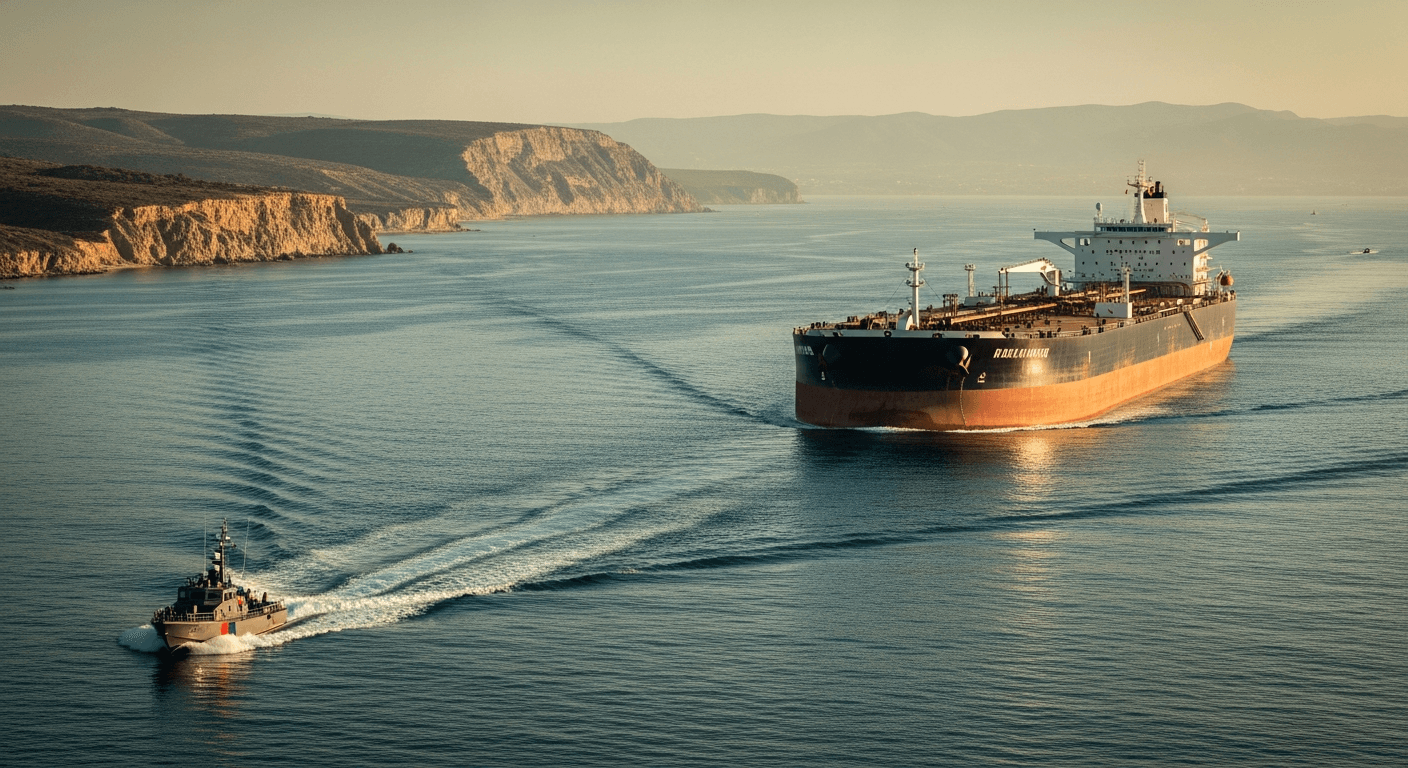
The U.S.-Iran MOU is a paper agreement. The mines are steel, and they're still in the water.
Key takeaways
- NYK Line CEO Takaya Soga told the Financial Times that Hormuz shipping will remain below 50% of prewar levels for months, with navigation confined to narrow alternative corridors around the mined main channel.
- The IMO confirmed approximately 80 naval mines laid by IRGC forces across the Strait's Traffic Separation Scheme; the IMO Secretary-General has paused the coordinated seafarer evacuation pending safety guarantees.
- Container freight hit a 22-month high the week of June 25, and attacks on commercial vessels continued through the weekend, including an IRGC drone strike on the tanker Kiku on June 27, signaling the MOU is not holding kinetically.
Takaya Soga, CEO of NYK Line, one of the world's largest shipping operators, told the Financial Times in an exclusive weekend interview that the Strait of Hormuz is nowhere close to functional. Shipping volumes will stay well below prewar levels for months, even if the U.S.-Iran memorandum of understanding signed June 17 holds, because the physical obstruction is independent of political agreements.
"The routes available for navigation are extremely limited, they're very narrow corridors," Soga said. "We're still nowhere near returning to conditions before the closure of the Strait of Hormuz."
The story was first reported by the Financial Times.
80 Mines in the Main Channel
The operational picture underneath the diplomatic headline is stark. IMO Secretary-General Arsenio Dominguez confirmed at a June 27 press briefing that approximately 80 naval mines are sitting across the Strait's Traffic Separation Scheme, the designated main shipping corridor. Bloomberg reported the IMO's estimate directly from the Secretary-General's statement.
With the TSS mined, vessels are routed through two narrow workaround corridors: one northern lane under Iranian-controlled waters, one southern lane coordinated by Oman and U.S. forces. Neither replaces the throughput capacity of the main channel. That's the physical constraint Soga is describing, and no MOU changes it until minesweepers clear it.
Dominguez paused the IMO's coordinated evacuation plan, citing the need to "reconfirm that the necessary safety guarantees continue to be in place." The pause came after the Evergreen-operated container ship Ever Lovely (Singapore-flagged) was attacked on June 25, followed by U.S. retaliatory strikes against Iran, Iranian strikes targeting Bahrain and Kuwait, and an IRGC drone strike on the Panama-flagged tanker Kiku on June 27. UK maritime authorities separately confirmed a vessel was struck on its starboard side roughly 7.5 nautical miles southeast of Dahit, Oman.
The conflict began when U.S. and Israeli forces launched airstrikes on Iran on February 28, 2026.
The Market Is Mispricing Duration
This is being covered as a shipping story. It's an inflation story.
Hormuz carries roughly 20% of the world's traded oil. With the TSS mined and two narrow corridors replacing it, effective throughput is locked below half of prewar levels by the operational assessment of a company running one of the world's largest commercial fleets. That constraint doesn't resolve with a press release. It resolves when minesweepers physically clear 80 mines from an active conflict zone, a process that takes months under ideal conditions and considerably longer under hostile ones.
Container freight was already pricing in dislocation. Drewry's World Container Index registered $4,166 per 40-foot container for the week of June 25, a 22-month high. Xeneta has forecast no supply-chain normalization before mid-September. Every month the mines stay in the TSS is another month of cost-push pressure passed through to manufacturing, food, and transport, feeding CPI and complicating Fed decision-making.
The "normalization" narrative priced into markets after the June 17 MOU was a mispricing of physical reality. The energy shock isn't a spike resolving on a diplomat's timeline. The weekend's kinetic activity, three attacks on commercial vessels and an IMO evacuation pause, confirms the deal isn't holding on the water regardless of what it says on paper.
TFTC has been tracking the petrodollar fractures, multipolar energy flow rerouting, and the inflation implications of the Hormuz closure since the conflict began.
What to Watch
The thesis breaks if U.S. Navy and allied minesweepers complete verified clearance of the TSS and tanker-transit data tracked by Kpler or Bloomberg returns to within 20% of prewar daily averages (the baseline is roughly 20 million barrels per day through the strait). Until that data moves, the market is underpricing the duration of disruption, and the sustained energy-input premium is a persistent tailwind for hard-money demand. Watch the Kpler weekly transit count and any UKMTO threat-level change as the leading indicators.
Update, July 7, 2026
The Al Rekayyat, owned by Qatar's state shipping company Nakilat, was struck early Tuesday about 8 nautical miles east of Limah, Oman.
The vessel was fully loaded at Qatar's Ras Laffan export terminal, making it the first Qatari LNG carrier targeted since the US-Iran conflict began in late February.
EOS Risk Group classified the incident as either an Iranian suicide drone or missile strike that resulted in a fire, with no casualties reported.
The tanker appeared to be transiting part of the Hormuz chokepoint with its transponder off, indicating it was not on an Iranian-approved shipping route.
Following the attack, another fully loaded Qatari LNG carrier, Al Areesh, made an abrupt U-turn before entering the strait and began circling, per Bloomberg ship tracking data.
Of the 25 ships that transited Hormuz on Monday alone, only three did so on the Omani side with transponders on, despite a reminder from regional naval forces that the US-managed Oman route remained available.
An attack on a Qatari tanker is a direct threat to the country's plans to revive shipments from the world's largest LNG facility.
Brent crude rose more than 1% to $72.76 a barrel as traders reassessed the war-risk premium in the Gulf.
European natural gas prices surged as much as 6% on Tuesday, the most in a month, following the attacks.
US-Iran talks remain suspended while Tehran holds funeral ceremonies for late Supreme Leader Ali Khamenei, with Qatar saying negotiations will resume after the ceremonies conclude. The MOU is not holding. Mines in the TSS block the main channel; missiles are now taking out laden LNG carriers in the workaround corridors. Every energy input that transits Hormuz is being repriced in real time.
Update, July 9, 2026
The strike on Al Rekayyat has moved from tanker damage to a direct supply-chain consequence. QatarEnergy officials held a series of meetings following the attack, with CEO Saad Al-Kaabi deciding to cease plans to increase output at the Ras Laffan complex.
Operations will be kept at a minimum for safety reasons, and the number of vessels scheduled to dock at the plant in the coming days will be reduced.
Less than a month ago, Reuters had reported that QatarEnergy was ready to resume LNG production at Ras Laffan "very quickly" and expected to reach full output within a month. That timeline is now off the table.
Eleven empty LNG vessels are currently sitting outside Ras Laffan , staged for a ramp-up that is no longer happening. Last week, QatarEnergy extended force majeure notices for LNG supplies to some Asian customers until August, while Italy's Edison said the corresponding reservation on its imports would be valid until the beginning of September.
Tensions brought maritime traffic through the Strait of Hormuz to a near standstill on Thursday.
The market is repricing accordingly. Asian LNG spot prices are more than 80% above pre-war levels, while European benchmark gas prices rose above €50 per megawatt-hour for the first time since the US and Iran reached their interim peace deal last month.
The delay in restoring output at Ras Laffan could tighten the global gas market further as Europe and Asia seek supplies ahead of the winter season. The Bloomberg report makes clear this is no longer a shipping disruption story. It is a supply story. The world's largest LNG exporter has formally walked back its restart timeline because the workaround corridors are not safe enough to move product through.
Sources
- FT exclusive interview (first reported by the Financial Times)
- IMO Secretary-General Arsenio Dominguez press briefing, June 27, 2026
- Bloomberg: IMO estimates 80 mines in Hormuz's normal ship channel
- gCaptain / UKMTO: Ever Lovely attack and IMO evacuation pause
- NYK Line: Takaya Soga corporate profile
- Drewry World Container Index, week of June 25, 2026
- Xeneta: US-Iran deal, full container shipping recovery at least three months away
Frequently Asked Questions
The U.S. Energy Information Administration estimates that approximately 20% of the world's traded petroleum and liquefied natural gas transits the Strait of Hormuz, making it the world's most critical oil chokepoint. At below 50% of normal throughput, the effective supply reduction is roughly 10% of global traded oil, a sustained shock with no near-term physical fix.
The IMO developed a coordinated framework to safely passage commercial vessels and their crews that were stranded in the Persian Gulf following the strait's closure. IMO Secretary-General Arsenio Dominguez announced on June 27 that he was temporarily pausing the plan's implementation to reconfirm safety guarantees, following renewed attacks on commercial shipping. The pause leaves an unknown number of vessels and crew members awaiting passage through the strait.