Best Bitcoin Mining Hosting Companies (2026): Who to Trust With Your Miner
Hosting lets you own real hashrate without turning your garage into a data center. The catch is trust. An honest, criteria-first comparison of who to actually trust with your miner.

In April 2022, the U.S. Treasury sanctioned a Russian data center called BitRiver. Overnight, the American customers who had bought miners through Compass Mining and parked them at that facility were locked out of their own machines, stranded in Siberia, with no way to get them back. The hardware was theirs on paper. It didn't matter.
That is the whole problem with hosted mining in one story. When you host a miner, you own an asset that lives inside someone else's building, on someone else's power contract, subject to someone else's mistakes. Pick the right operator and hosting is the cleanest way to own real hashrate without turning your garage into a data center. Pick the wrong one and you learn that "you own the machine" is a sentence, not a guarantee.
Which is why the comparison below is built around one question instead of a spec sheet. Not price, not an advertised uptime number, but whether you can trust the operator with your machine.
This guide covers how retail hosting actually works, the two risks the marketing hides (counterparty failure and oversold uptime), the real difference between owning a machine and renting a cloud contract, and an honest read on the providers a normal person can actually use: Simple Mining, Compass Mining, Sazmining, Blockware, Abundant Mines, and a couple of specialists.
Here's the short version:
- Counterparty risk is the real risk. Your machine sits in their building. The track record of who honored that responsibility, and who didn't, matters more than a penny per kilowatt-hour.
- Nobody offers true "five nines" uptime, and honest operators admit it. The flexibility that makes your power cheap is the same flexibility that means the machines sometimes turn off. Treat any "100% uptime" claim as a red flag, not a feature.
- Own the machine, don't rent a contract. Real hosting and "mining as a service" leave you holding a physical ASIC. Cloud mining leaves you holding a receipt.
- Price barely separates the field. All-in rates land in a tight band around six to eight cents per kilowatt-hour. The cheapest option here also has the worst history.
- Trust and service beat every other variable. The provider that's transparent about what it can't promise is usually the one worth paying slightly more for.
At a glance
| Provider | What you actually get | All-in cost | Track record | Best for |
|---|---|---|---|---|
| Simple Mining | Pure hosting. You own the machine, set your own pool, payouts hit your wallet | ~7–8¢/kWh all-in (8¢ single, 7¢ at scale) | Clean; A-rated BBB, rate unchanged since 2021 | One vendor for buy + host + repair; trust-first buyers |
| Compass Mining | Marketplace + hosting. You own the machine, month-to-month exit | ~6–7¢/kWh, all-in | Rocky (see BitRiver, 2022) | Widest hardware selection and flexibility |
| Sazmining | Mining-as-a-service. You keep the rig and the keys, payouts are non-custodial | Revenue share (~15–20% of BTC) | Clean but small | Renewable power, hands-off, self-custody payouts |
| Blockware | Buy-and-host marketplace. You own the machine, paid to self-custody | ~7.8¢/kWh, all-in | Fraud suit + CEO change | One-click buy-and-host and the tax angle |
| Abundant Mines | Pure hosting. Oregon hydro; you own the miners and keep 100% of the BTC, flat-rate | Flat all-in (premium) | Clean, but small/regional | Renewable power + a clean record over the lowest price |
| D-Central (specialist) | Hosts hardware you already own, plus top-tier repair | Custom quote | Contracting; de-emphasizing hosting | Repairs, and hosting a rig you bought elsewhere |
| Bitdeer (contrast) | A cloud contract. You own nothing at the end | Variable fees | Public, but volatile | Not recommended if the goal is owning hashrate |
The one question that matters: can you trust them with your machine?
Every other feature is downstream of this. A host that goes under, gets sanctioned, or simply runs its facilities badly can cost you the entire machine, and no amount of cheap electricity makes up for that.
The history here is not reassuring, which is exactly why it's worth knowing before you wire money.
Compass Mining is the biggest and most searched name, and also the cautionary tale. Beyond the 2022 BitRiver sanction that stranded customer machines, that same stretch brought a facility in Maine that effectively held hardware hostage in a billing dispute, waves of complaints, layoffs, and the resignation of its CEO and CFO. Compass has since restructured, brought more capacity in-house, and now offers genuinely flexible month-to-month terms. But its public trust scores remain poor, and the lesson its own history teaches is the one worth internalizing before you pick anyone.
Blockware looks clean on the surface and is genuinely retail-accessible, with a single miner costing a little over a thousand dollars. Dig into the record, though, and you find a 2022 federal lawsuit alleging the company displayed "100% uptime" while one of its facilities sat curtailed for roughly fifty days (Blockware called the claims baseless, and the suit remains unresolved), and a 2026 boardroom shake-up in which the board replaced its founding CEO as the company pivots toward AI and high-performance computing. None of that is disqualifying. All of it is worth knowing.
Simple Mining is, notably, the one name in this group with no litigation, sanctions, or hostage-facility episodes in its history. Its founder is also refreshingly direct about what the company does and doesn't promise, which is the second thing the marketing in this category tends to hide.
The uptime myth
Somewhere in every hosting pitch is an uptime number. Ninety-five percent. Ninety-nine. Occasionally, and this should stop you cold, one hundred.
Here is the uncomfortable truth, stated by a hosting founder himself. Adam Haynes, who runs Simple Mining, drew the contrast with traditional data centers plainly in a 2025 interview: "unlike bitcoin mining, these traditional data centers cannot be a flexible load. They require five nines of uptime, 99.9999% uptime on an annual basis. And you're not going to get that out of the standard bitcoin mining facility as of today."
He wasn't criticizing his own business. It's the physics of the thing. A mining facility earns its cheap power precisely by being a flexible load that can shut down in seconds when the grid needs the electricity back, and it does. "We can shut down our full load within sixty seconds at our facilities," Haynes said of their Iowa operations. That flexibility is what earns the low rate, and it is, definitionally, downtime.
So an honest operator does two things. It tells you the machines will sometimes be off, and it credits you for the time they were. Simple Mining does this through what it calls precision billing, where you're billed against actual uptime rather than a flat promise, plus a no-penalty pause you can trigger yourself if mining goes underwater. Sazmining frames its version as a rig-performance guarantee rather than an uptime guarantee, which is at least honest about what it's measuring. The rest mostly show you historical uptime and leave it there.
The practical rule: a provider that promises you 100% uptime is either misunderstanding its own business or misrepresenting it. Blockware got sued over exactly that kind of claim. Prefer the operator that tells you the machines turn off and pays you back for it.
Own the machine, or rent a receipt
Three different products get marketed as "hosting," and the difference comes down to what you're left holding.
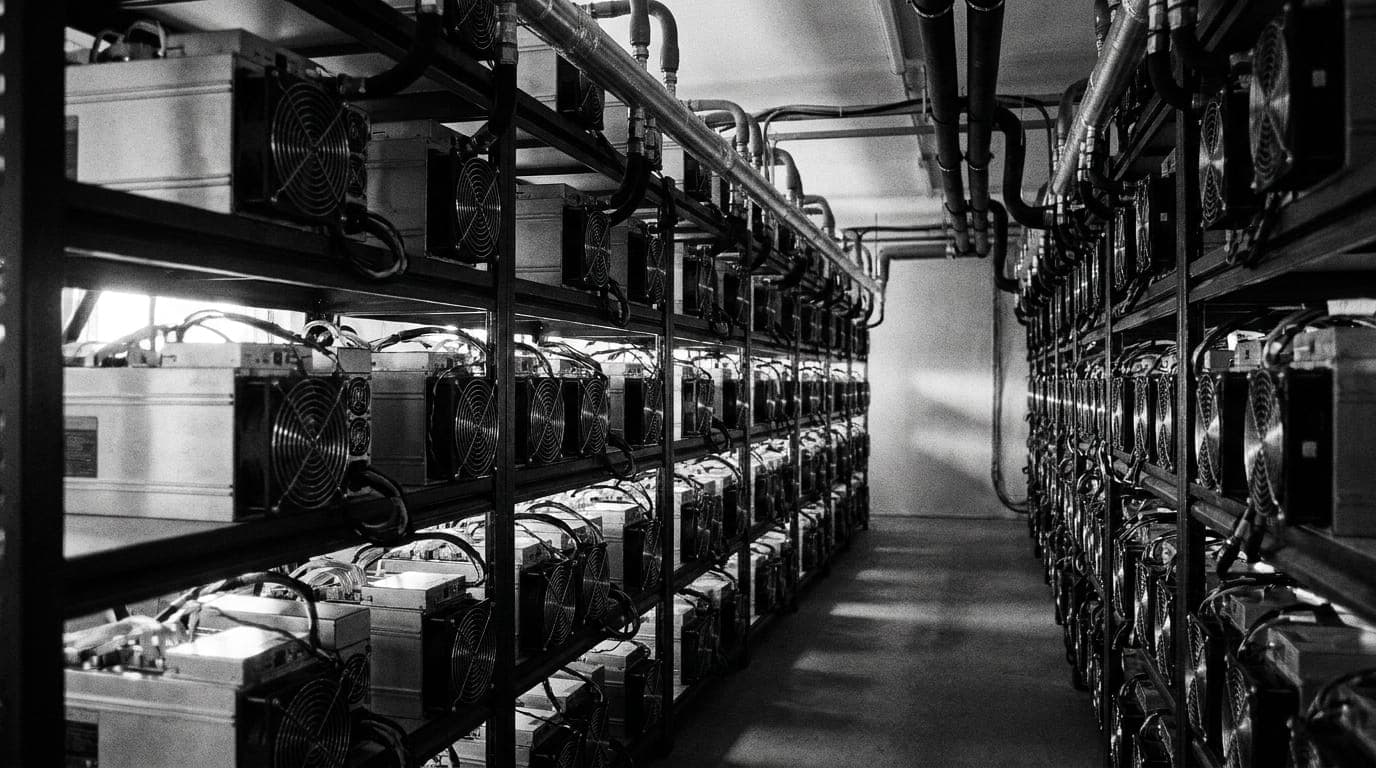
Pure hosting is the straightforward version. You buy an ASIC, ship it to the facility, and pay per kilowatt-hour to rack, power, cool, and maintain it. You point it at whatever pool you want and the Bitcoin lands in your wallet. You own the machine outright and can pull it out and resell it. Simple Mining and D-Central work this way.
Mining-as-a-service collapses the buying and hosting into one transaction. You purchase the machine from the provider's marketplace, they run it, and you're paid in Bitcoin. You still own a specific physical machine. Sazmining and Blockware work this way, and Sazmining goes a step further by routing payouts non-custodially straight from the pool to your wallet, so you're never trusting them to hold your coin.
Cloud mining is the one to be careful with. You buy a contract for hashrate and own no hardware at all. Bitdeer, a public company on the Nasdaq with audited financials, is the legitimate end of this category, and it's a real operator. But its retail product is a fixed-term contract with variable fees the company can adjust mid-stream, paid out in dollars rather than Bitcoin, that leaves you with nothing when the term ends. Compare that to owning a machine you can move, re-point, self-custody the coin from, and sell. A cloud contract is a time-boxed claim on someone else's hardware, so if your goal is to own hashrate, it isn't the tool.
There's a reason Haynes, asked the oldest question in mining, wouldn't oversell even his own product: "there is no... I don't think there's a single person who could sit here and tell you confidently exactly how the return on investment is going to work." Some of their clients recouped their machine cost in six months. Others took two years or more. Anyone promising you a fixed return is selling you something. Owning the machine at least means you keep the asset while you find out.
The providers, honestly
Simple Mining. Cedar Falls, Iowa, across ten data centers the company owns and runs itself, which is what lets it hold its rate steady and fix machines in-house. Rates are all-in and tiered by size: eight cents per kilowatt-hour for a single machine, dropping to seven at enterprise scale, and the company hasn't raised them since 2021. Repairs are certified and in-house, with free repair labor and unlimited fan replacements, plus an optional protection plan that covers parts. You get precision billing that charges only for the hours your machine is actually hashing, a self-service pause, and a marketplace to resell the rig when you're done. Roughly two-thirds of Iowa's grid is wind. You own the machine, you choose the pool, the payouts are yours, and there's no minimum, so a single miner is fine. It isn't the cheapest and it won't hand you a hard uptime number. What it has is the cleanest record in the group, an A-rated BBB profile against Compass's near-bottom score, and a founder who won't oversell you, which in this category is the thing that pays off. The full breakdown is in the Simple Mining review on Bitcoin Products; hosting is at simplemining.io, and there's a free 7-day trial if you want to watch real hashrate before buying.
Compass Mining. The widest selection and the most name recognition, now with genuinely flexible month-to-month "easy exit" terms and an all-in rate around six to seven cents that's among the lowest here. The catch is the history above and the trust scores that reflect it. If you use Compass, spread your machines across facilities and don't assume the rate is the whole story.
Sazmining. The cleanest of the mining-as-a-service options for anyone who cares about self-custody. You keep the rig and the keys, payouts are non-custodial, and the power is renewable. The model is a revenue share of fifteen to twenty percent of the Bitcoin you mine rather than a flat per-kilowatt rate, plus a service fee that isn't capped, and its exit terms aren't published. It's a small operator, so size up the counterparty accordingly. Details in the Sazmining review.
Blockware. A slick one-click buy-and-host with a low entry point, BTC payouts to self-custody, and a real financing-and-tax pitch, since bonus depreciation is a genuine draw for the right buyer. Weigh that against the 2022 uptime lawsuit and the recent CEO change and AI pivot. Retail-accessible and legitimate, with baggage you should read first.
Abundant Mines. A smaller Oregon host running on Pacific Northwest hydro, where you own the miners and keep one hundred percent of the Bitcoin they produce, on flat-rate all-in pricing. It advertises high uptime and has the cleanest reputation in this group, with no litigation or incidents to speak of. The tradeoffs are its size and its price. It's a regional operator rather than a national one, and the entry point runs toward the premium end. A strong pick if renewable power and a clean record matter more to you than the lowest sticker price.
D-Central (specialist, not a head-to-head pick). The one operator here that will host a machine you already bought somewhere else, and one of the best ASIC repair shops on the continent, running on Quebec hydro. Worth knowing for repairs specifically. But it's stepping back from hosting after a December 2025 restructuring that followed a theft at one of its sites and softening institutional demand, so don't build a hosting plan around it.
What you might be looking for instead
If a facility full of someone else's machines isn't the itch you're scratching, a few adjacent paths are probably closer to what you actually want:
- Running a machine yourself at home, from a desktop Bitaxe to a garage-grade ASIC. Start with the resurgence of at-home Bitcoin mining.
- Heating your house with a miner instead of paying a hosting bill, which is its own surprisingly good deal in a cold climate. See the home mining and heat playbook.
- Just wanting exposure without any of the above, in which case the honest answer is usually to buy and self-custody the Bitcoin and skip mining entirely.
Which path fits you
| If you... | Then |
|---|---|
| Want one vendor to buy, host, and repair, and value trust over saving a penny | Simple Mining |
| Want the widest hardware selection and maximum contract flexibility, eyes open on history | Compass |
| Care most about self-custody payouts and renewable power, and are comfortable with a small operator | Sazmining |
| Want one-click buy-and-host and the depreciation angle | Blockware, after reading the history |
| Want renewable hydro power and to keep 100% of your BTC, and don't mind paying a premium | Abundant Mines |
| Already own a machine and need it hosted or repaired | D-Central |
| Want to own real hashrate, not a contract | Anything but cloud mining |
| Just want Bitcoin exposure with none of the operational risk | Skip hosting; buy and self-custody |
What to actually do this week
If you're new to this, don't start by wiring five figures to anyone. Buy a small amount of Bitcoin, get comfortable self-custodying it, and decide whether you want mining exposure at all. Most people are better served just stacking.
If you've decided you want hosted hashrate, pick two providers from the list, pull their logged-in rate cards, and read the actual hosting agreement, not the marketing page. The numbers on the public site and the numbers in the contract are not always the same document.
If trust is your priority, which it should be, start with the operator that has no litigation behind it and a founder on record refusing to oversell. The full Simple Mining review walks through the rates, the repair terms, and the trade-offs before you commit.
If you already own machines, treat D-Central's repair operation as a resource regardless of where you host.
And whatever you decide, keep the coin in your own custody. The entire point of owning the machine instead of a cloud contract is that the Bitcoin, and the hardware, end up in your hands. Stack sats.
Frequently Asked Questions
What is Bitcoin mining hosting?
Hosting means you own an ASIC miner but keep it in a professional data center that provides the cheap power, cooling, and maintenance it needs to run around the clock. You pay a per-kilowatt-hour rate (or, in the mining-as-a-service model, a share of what you mine), and the Bitcoin the machine earns goes to your wallet. You keep ownership of the physical hardware.
Is hosted Bitcoin mining profitable?
Sometimes, and no one can promise you when. Returns depend on the Bitcoin price, network difficulty, your hardware's efficiency, and your all-in power cost. Operators have seen customers recoup a machine's cost in as little as six months and as long as two years or more. Treat any fixed ROI promise as a sales tactic, not a forecast.
Is Bitcoin mining hosting safe?
The mining is fine; the counterparty is the risk. Your machine physically sits in someone else's building, so the real question is whether that operator will still be solvent, unsanctioned, and competent a year from now. History says that isn't guaranteed. Favor operators with clean track records, and never let a host custody your mined Bitcoin.
What does hosting cost per kilowatt-hour?
All-in retail rates generally run about six to eight cents per kilowatt-hour, bundling power, rack space, cooling, and support. It's very hard to find a genuinely all-in rate below six cents in the US or Canada. Mining-as-a-service providers may charge a revenue share instead of a flat rate, so compare the total cost, not just the headline number.
Do I own the miner when I host it?
In pure hosting and mining-as-a-service, yes, you own a specific physical machine and can resell or relocate it. In cloud mining you own only a contract for hashrate, with no underlying hardware you can claim. That distinction is the most important one in this entire category.
What's the difference between hosting and cloud mining?
Hosting means a real ASIC that belongs to you lives in a facility. Cloud mining means you rent hashrate on a contract and own nothing physical. Legitimate cloud operators exist, but the model shifts control and risk to the provider and leaves you with no asset when the term ends. If your goal is to own hashrate, host a machine.
Is Compass Mining legit?
Compass is a real, operating company and the largest retail hosting brand, with flexible terms today. It also has the roughest history in the space, including the 2022 episode where sanctions on a hosting partner stranded customers' machines, plus lawsuits, layoffs, and executive departures. It's usable with eyes open; just diversify across facilities and read the fine print.
Can I host a miner I already bought somewhere else?
Usually not. Most hosts, including Simple Mining, Sazmining, and Blockware, require you to buy the hardware through them. D-Central is the notable exception that will host hardware you already own, though it's currently de-emphasizing hosting.
How many miners do I need to start?
One. Every provider in the main comparison above will host a single machine, so hosting is accessible to individual retail miners, not just large operations. Entry hardware starts a little over a thousand dollars.