Understanding Bitcoin Addresses: A Comprehensive Guide
If you're venturing into the world of Bitcoin, one fundamental aspect you need to comprehend is the bitcoin address. This guide will demystify Bitcoin addresses, their function, and their critical role in safeguarding your privacy and security in the realm of digital currency.


If you're venturing into the world of Bitcoin, one fundamental aspect you need to comprehend is the bitcoin address. This guide will demystify Bitcoin addresses, their function, and their critical role in safeguarding your privacy and security in the realm of digital currency. With this knowledge in hand, you'll be ready to confidently send and receive bitcoin while taking self-custody of your assets.
Introduction to Bitcoin Addresses
What is a Bitcoin Address?
Just like an email address is used to send and receive messages, a bitcoin address is a unique string of letters and numbers used for receiving bitcoin to your digital wallet. These addresses are the cornerstone of bitcoin transactions, enabling the transfer of funds within the cryptocurrency network.
The Role of Bitcoin Addresses in Cryptocurrency Transactions
Every transaction on the bitcoin network requires a sender and receiver, each with their own Bitcoin address. This system ensures that the process of transferring Bitcoin is seamless and secure, as long as best practices are followed.
The Anatomy of a Bitcoin Address
Different Prefixes and Formats
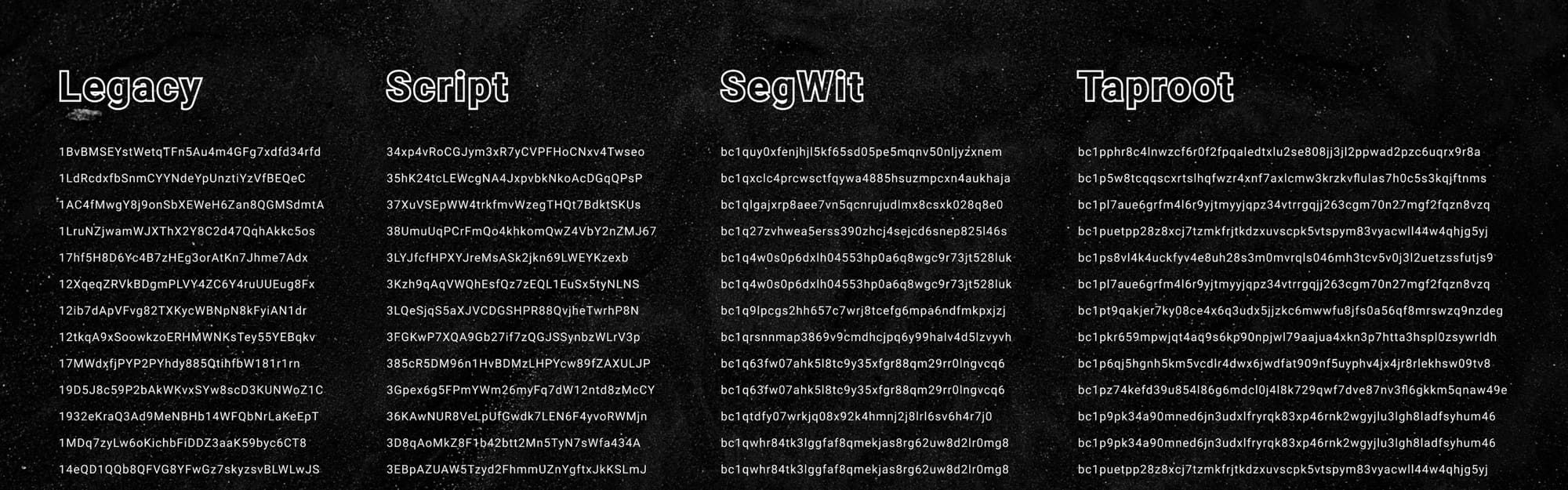
Bitcoin addresses come in various shapes and sizes, starting with different prefixes such as '1', '3', or 'bc1'. Understanding these formats is essential for proper transaction handling.
Bech32 Format Explained
The bech32 format is a newer style of bitcoin address that is characterized by its absence of capital letters. Despite its different appearance, it functions just like any other address format.
The Importance of Bitcoin Addresses
Privacy and Security Considerations
Transacting with bitcoin addresses with a clear understanding of their implications is vital for maintaining both privacy and security. Your transaction history and balance are publicly visible, making privacy-conscious practices a must.
Best Practices for Bitcoin Address Usage
Using New Addresses
To maintain privacy, it's recommended to generate a new address for each transaction. This approach prevents others from trivially tracking your bitcoin balance and transaction history.
Verifying Address Accuracy
Given that bitcoin transactions are irreversible, ensuring the accuracy of the address used is paramount. Simple steps like using QR codes and copy-paste techniques can prevent costly mistakes.
How to Share and Receive Bitcoin Addresses
QR Codes and Their Convenience
Sharing your bitcoin address is made easy with QR codes, allowing for quick scanning and error-free transmission of information.
Safe Transfer Methods
Adopting safe practices for exchanging addresses can help avoid the irreversible loss of funds due to incorrect transactions.
Understanding the Public Ledger
The Transparency of Bitcoin Balance on Addresses
The bitcoin blockchain is a transparent ledger where the balance of each address is publicly accessible. This feature underscores the need for privacy when dealing with bitcoin addresses.
Protecting Privacy Through Address Management
By using multiple addresses and managing them wisely, you can enhance your privacy and prevent potential tracking of your activity on the bitcoin network.
Ensuring Address Accuracy
The Significance of Each Character in an Address
Every character in a bitcoin address is crucial. A single mistake could lead to the loss of funds, making attention to detail a top priority.
Utilizing Checksums to Avoid Typos
Bitcoin addresses include built-in checksums to help detect and prevent errors. This safety feature adds an extra layer of protection against typos.
The Creation of Bitcoin Addresses
From Seed to Address
A Bitcoin address is born from a randomly generated seed, which can be backed up as a seed phrase or master private key. This is the core secret that grants you access to spend bitcoin from the addresses linked to your wallet.
Single Sig vs. Multi Sig Wallets
Addresses can be associated with either a single signature (single sig) or multiple signature (multi sig) wallets. Understanding the difference is key to choosing the right wallet for your security needs.
Securely Managing Your Bitcoin Addresses
Using Hardware Wallets for Enhanced Security
Hardware wallets offer an additional layer of security by allowing you to verify addresses and conduct transactions in a secure environment.
Conducting Test Transactions
Performing a small test transaction before moving large amounts of bitcoin can provide peace of mind and ensure that the address is correct.
Conclusion: Empowering Your Bitcoin Journey
This comprehensive guide aims to equip you with the understanding necessary to navigate the bitcoin network confidently. With the knowledge of how bitcoin addresses work, you're now better prepared to take charge of your bitcoin and prioritize your privacy and security.
Frequently Asked Questions
FAQ #1: What is a bitcoin address checksum?
A checksum is a sequence of characters added to a bitcoin address that allows for the detection of errors in the address string, preventing the misdirection of funds.
FAQ #2: How often should I generate a new bitcoin address?
It is recommended to generate a new bitcoin address for each transaction to safeguard your privacy and prevent others from tracking your bitcoin balance.
FAQ #3: Can I recover bitcoin sent to a wrong address?
Unfortunately, bitcoin transactions are irreversible. If you send bitcoin to an incorrect address, the funds cannot be recovered unless the recipient agrees to send them back.
FAQ #4: What is the difference between a single sig and multi sig wallet?
A single sig wallet requires one signature to authorize a transaction, whereas a multi sig wallet requires multiple signatures, providing an extra layer of security.
FAQ #5: How can I ensure the bitcoin address I'm using is secure?
Always verify the address using secure methods such as QR codes or copy-paste, and consider using a hardware wallet to enhance security.